Home
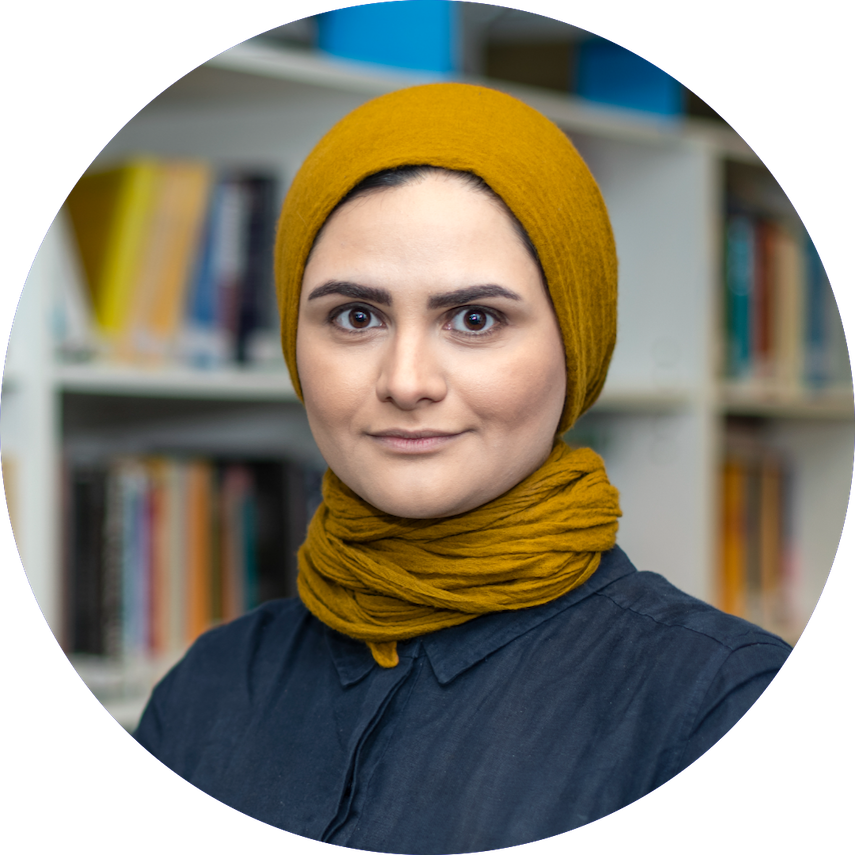
My research focuses on designing algorithms for efficient and robust adaptation under continuous distribution shifts with applications in genomics, perturbation biology and experimental design. I'm interested in representation learning, generative modeling and causal inference. Since my first appointment in 2014, I have had the pleasure of collaborating with several leading biomedical research institutions, including the Peter MacCallum Cancer Centre, Cancer Therapeutics CRC Australia, the Garvan Institute of Medical Research, Pfizer, Roche, the Broad Institute, Wellcome Sanger Institute, WEHI, and Helmholtz Munich, where I spent most of my time. I was named a Rising Star in Data Science by Stanford University in 2025.
Research highlights
- July 2026: I co-organised a one-day workshop on Virtual Cells at Helmholtz Munich. I also moderated the session on World Models and autonomous systems.
- May 2026: I gave a talk at R-Ladies+ Melbourne on Generative Modeling [Link].
- April 2026: Three papers accepted to ICLR 2026 MLGenX and Gen2 workshops. SCOPE was featured in Valence Labs blog post on Virtual Cell @ ICLR 2026.
- April 2026: New preprint "Perturbation-guided mapping of colorectal cancer cell states to causal mechanisms" is out on bioRxiv.
- Jan 2026: I organised and presented at the Perturbation Modeling Forum at Helmholtz Munich.
- Jan 2026: I gave a talk at the Leopoldina Meeting (German National Academy of Sciences) at TUM on my work on linking observational and pertubation atlases.
- Sep 2025: I was named a Rising Star in Data Science by Stanford University.
Selected Links
Publications
Below is a selected list of my publications.
- Perturbation-guided mapping of colorectal cancer cell states to causal mechanisms. bioRxiv, 2026-03.
- Beyond single-axis designs: multi-objective optimization for complex perturbation atlases. ICLR 2026 MLGenX.
- Structured and interpretable patient embeddings from Single-Cell Foundation Models. ICLR 2026 Gen2. Co-last author.
- Generative Modeling of Spatial Transcriptomics via Gaussian Mixture Flow Matching. ICLR 2026 Gen2.
- Multimodal weakly supervised learning to identify disease-specific changes in single-cell atlases. bioRxiv, 2024-07.
- An integrated transcriptomic cell atlas of human endoderm-derived organoids. Nature Genetics, 2025, 1-12.
- Probe set selection for targeted spatial transcriptomics. Nature Methods, 2024, 1-11.
- GraphCompass: spatial metrics for differential analyses of cell organization across conditions. Bioinformatics, 40(Supplement_1), July 2024, i548-i557. DOI
- Dividing out quantification uncertainty allows efficient assessment of differential transcript expression with edgeR. Nucleic Acids Research, 52(3), 2024, e13-e13.
- Population-level integration of single-cell datasets enables multi-scale analysis across samples. Nature Methods, 2023. Helmholtz Munich Best Paper Award.
- MsImpute: Estimation of missing peptide intensity data in label-free quantitative mass spectrometry. Molecular and Cellular Proteomics, 2023. Outstanding Technological Innovation article by MCP journal.
- Best practices for single-cell analysis across modalities. Nat Rev Gen, 2023.
- Biologically informed deep learning to query gene programs in single-cell atlases. Nature Cell Biology, 2023, 1-14.
- Continual single-cell architecture surgery for reference mapping. ICML 2022 Workshop on Computational Biology.
- Disentanglement via mechanism sparsity by replaying realizations of the past. ICLR 2024 Workshop on Machine Learning for Genomics Explorations.
- Identification of cell types, states and programs by learning gene set representations. bioRxiv, 2023-09.
- Conditionally Invariant Representation Learning for Disentangling Cellular Heterogeneity. arXiv preprint arXiv:2307.00558, 2023.
Students
PhD students, MSc / BSc students.
Mentoring/Co-supervision
- Zihe Zheng, PhD, TUM/Helmholtz Munich, 2025.
- Suhan Cho, PhD, TUM/Helmholtz Munich, 2025.
- Goncalo Pinto, PhD, TUM/Helmholtz Munich, 2025.
Supervision
- Lisa Schunke, MSc CS Informatics, TUM, 2025. Now PhD applicant Vienna.
- Layla Zadina, BSc Robotics, TUM, 2025.
- Lars Pechowski, BSc Mathematics, TUM, 2025.
- Zhiyuhan Song, MSc CS Informatics, TUM, 2025.
- Johannes Weindl, MSc CS Informatics, TUM, 2024.
- Mikkel Rassmusen, MSc CS, DTU, 2024. Now PhD graduate student DTU.
- Ismail Benayed, BSc Robotics, TUM, 2024.
- Georgiana Barbut, MSc Robotics, TUM, 2024. Now PhD applicant Vienna.
- Rashika Jakhmola, MSc Mathematics, TUM. Now PhD graduate student DKFZ.
- Lucas Ronchetti, BSc CS, TUM, 2023.
- Tom Fischer, MSc Mathematics, TUM, 2023.
- Rasmus Moller Larsen, MSc CS, DTU, 2023. Now PhD graduate student Helmholtz Munich.
- Jack Finlay, Visiting HIDA scholar, Duke University, 2023.
- Yi Xie, Visiting student, WEHI, 2019. Now PhD student China.
Contact
- soroor.hediyehzadeh@helmholtz-munich.com
- Address
- Helmholtz Zentrum München
Ingolstädter Landstraße 1
85768 Neuherberg, Germany